
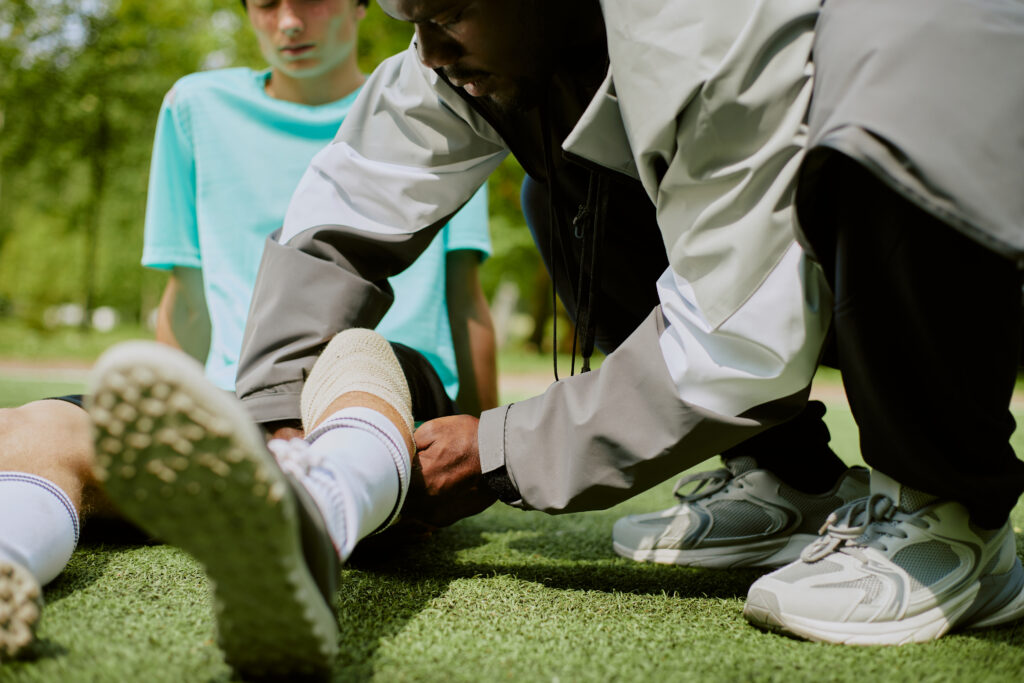
A Parent’s Guide to Sports Injuries and Where to Get Care
If your calendar is a blur of practices, games, tournaments, and carpool duty, congratulations.
You are officially a sports parent. You have snacks in bulk, folding chairs in your trunk, and a sixth sense for when a “walk it off” situation is about to turn into something… more dramatic.
Youth sports are amazing for confidence, teamwork, and burning off energy. They are also a reliable source of bumps, bruises, and the occasional moment where everyone freezes and looks at you for answers. Knowing what injuries are common and where to go for care can save time, stress, and a whole lot of unnecessary panic.
Let’s break it down by age, injury type, and when urgent care makes sense versus when it’s time for the emergency room.
Common Sports Injuries by Age Group
Elementary School Athletes
At this age, injuries usually come from falls, collisions, and learning coordination on the fly.
Most common issues:
- Scrapes, cuts, and bruises
- Mild sprains or strains
- Jammed fingers
- Minor head bumps without symptoms
Kids bounce back fast, but they are not great at explaining what hurts or how bad it feels. When swelling, limping, or pain sticks around longer than expected, it is worth having it checked.
Middle School Athletes
This is where growth spurts meet increased competition. Bodies are changing quickly, and coordination does not always keep up.
Most common issues:
- Ankle and knee sprains
- Muscle strains
- Overuse injuries like shin splints
- Suspected concussions
If your athlete keeps favoring one side, complains of pain during activity, or seems “off” after a hit, it is a good idea to pause play and get guidance before returning to sports
High School Athletes
High school sports bring higher intensity, faster play, and more physical contact.
Most common issues:
- Ligament injuries
- Fractures
- Dislocations
- Concussions
- Overuse injuries from year-round sports
At this level, ignoring pain can turn a small problem into a season-ending one. Early evaluation matters.
Urgent Care or ER? The Question Every Parent Asks
Here is a simple way to think about it.
| URGENT CARE | ER |
| Sprains and strains | Head injuries with loss of consciousness |
| Suspected minor fractures | Confusion, repeated vomiting, or worsening headache |
| Sports-related cuts needing stitches | Obvious bone deformity |
| Mild concussions without severe symptoms | Severe bleeding that will not stop |
| Swelling or pain that does not improve with rest and ice | Neck or spine injuries |
| Trouble breathing or severe chest pain |
Many urgent care clinics can provide
- On-site X-rays
- Basic splinting
- Return-to-play guidance
- Referrals to specialists
For families juggling school, practice, and work, this can be a practical first stop for non-life-threatening injuries.
If something looks serious or your gut says, “This is not normal,” trust that instinct and head to the emergency room.
A Quick Word on Concussions
Concussions are not always dramatic. Sometimes it is just a headache, light sensitivity, or mood change hours later. When in doubt, sit them out. Returning to play too soon can make recovery longer and riskier. Many parents find it helpful to have an evaluation even when symptoms seem mild, just to be safe and get clear next steps.
Tips to Reduce Injury Risk (Without Becoming That Parent)
- Encourage proper warm-ups and stretching
- Make sure equipment fits correctly
- Watch for signs of overuse or burnout
- Let kids rest when they are hurt, even if a big game is coming up
Yes, they may be disappointed. Future knees will thank you.
The Takeaway for Sports Parents
Injuries are part of the deal when kids play hard and love their sport. Most are manageable with the right care at the right time. Knowing where to go helps you act quickly and confidently when the next ice-pack moment arrives.
And it will arrive. Probably on a Sunday afternoon. Right before dinner.
Because raising athletes is a full-contact sport too.