
What You Need to Know About Tick Season
Tick activity peaks between May and July, with May seeing the highest rate of tick-related emergency visits at 134 per 100,000 people. Over 89,000 cases of Lyme disease were reported in 2023 alone, making it the most common tick-borne illness in the United States. Most tick bites can be evaluated and treated at an urgent care center rather than the ER. Prevention includes wearing protective clothing, using EPA-approved repellents, performing full-body tick checks after outdoor activity, and maintaining your yard to reduce tick habitats.
In this article, we cover:
- Key statistics on tick bites and Lyme disease
- How to properly check for and remove ticks
- Signs of tick-borne illness to watch for
- Prevention tips for your family and yard
- When to visit urgent care vs. the ER for a tick bite
Nobody Puts “Tick Check” on Their Summer Bucket List
But honestly? It probably deserves a spot near the top.
As the weather warms up and your family starts spending more time outside, there’s a tiny, unwelcome guest waiting in the tall grass, wooded trails, and even your own backyard. Ticks are most active between May and July, and they don’t exactly announce themselves. By the time you notice one, it may have already been attached for hours.
We get it. The topic isn’t fun. But a little knowledge goes a long way toward keeping your family safe this season, and knowing when to seek care can make a real difference in outcomes.
The Numbers Are Hard to Ignore
Tick-borne illness has been on a steady rise in the U.S., and the data paints a pretty clear picture of just how widespread the problem has become.
- 134 tick bite ER visits per 100,000 people were recorded in May 2025, making it the highest monthly rate on record (The Bump)
- Over 89,000 Lyme disease cases were reported to the CDC in 2023, and that number is widely believed to underrepresent the true count since many cases go undiagnosed or unreported (CDC)
- The Northeast leads in Lyme-related urgent care diagnoses, but cases have been expanding into the Midwest and Southeast in recent years (JUCM)
These aren’t just numbers. They represent real families dealing with something that’s largely preventable when you know what to look for.
How to Check for Ticks (and Actually Find Them)
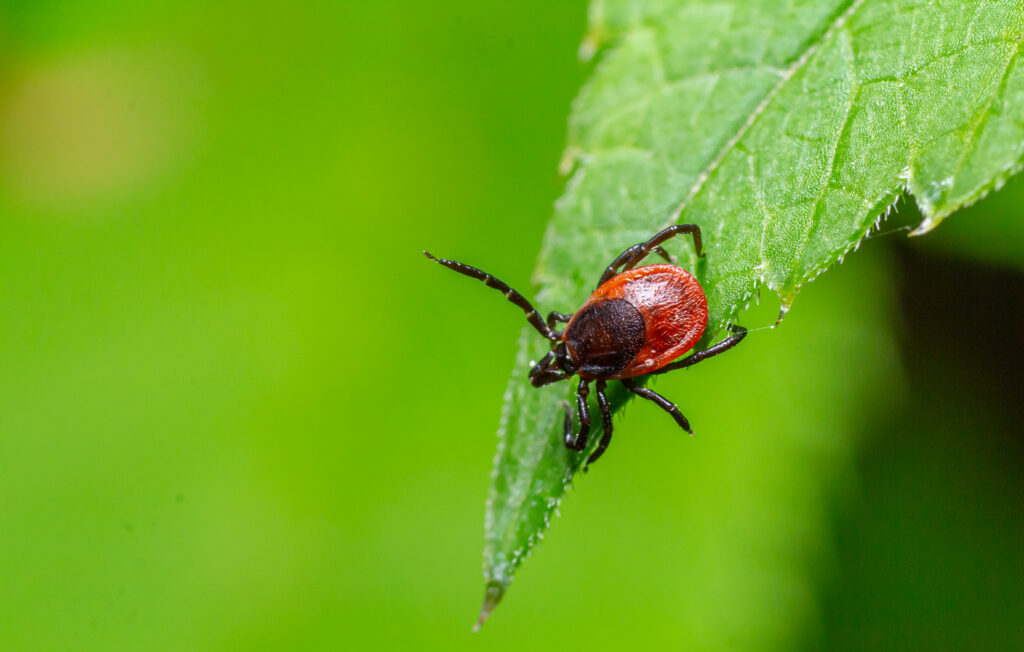
Ticks are small. Some species, like the blacklegged tick (also called the deer tick), can be as tiny as a poppy seed in their nymph stage. That means a quick glance in the mirror after a hike won’t always cut it.
After spending time outdoors, here’s what a thorough tick check should look like:
- Check the hidden spots first. Ticks love warm, moist areas. That means behind the ears, along the hairline, under the arms, behind the knees, around the waist, and in the groin area.
- Use your fingers, not just your eyes. Running your hands slowly over the skin can help you feel a tick before you spot one, especially in areas covered by hair.
- Don’t forget kids and pets. Children should be checked carefully after outdoor play, and dogs are especially prone to picking up ticks on walks and hikes.
- Shower within two hours. The CDC recommends showering soon after being outdoors, which has been shown to reduce the risk of Lyme disease by washing off unattached ticks.
How to Safely Remove a Tick
If you do find a tick, stay calm. Not every tick carries disease, and prompt removal significantly reduces the risk of infection. The key is doing it the right way.
Here’s the proper removal method recommended by the CDC:
- Use fine-tipped tweezers to grab the tick as close to the skin’s surface as possible.
- Pull upward with steady, even pressure. Don’t twist or jerk, as this can cause the mouthparts to break off and stay in the skin.
- After removal, clean the bite area thoroughly with rubbing alcohol or soap and water.
- Save the tick in a sealed bag or container (with a photo of it if possible). This can help with identification later if symptoms develop.
What NOT to do: Skip the home remedies. Coating a tick in nail polish, petroleum jelly, or using a hot match doesn’t work and can actually cause the tick to burrow deeper or release more saliva into the bite.
Signs of Tick-Borne Illness to Watch For
Most tick bites don’t result in illness. But when they do, catching it early makes treatment much more effective. Here are the symptoms to keep on your radar in the days and weeks following a bite:
- A bullseye-shaped rash (called erythema migrans) that appears within 3 to 30 days. This is the hallmark sign of Lyme disease and shows up in roughly 70-80% of cases.
- Fever, chills, and body aches that feel like the flu but show up without typical cold symptoms.
- Joint pain or swelling, especially in the knees.
- Fatigue and headaches that don’t seem to have another explanation.
- Numbness or tingling in the hands or feet in more advanced cases.
If any of these symptoms appear after a known or suspected tick bite, it’s time to be seen. Early treatment with antibiotics is highly effective for Lyme disease, but delayed treatment can lead to more serious complications affecting the joints, heart, and nervous system.
When to Visit Urgent Care vs. the ER
Here’s the good news: most tick bites and early signs of tick-borne illness can be handled at your local urgent care center. You don’t need to sit in an emergency room for hours unless you’re experiencing severe symptoms like difficulty breathing, chest pain, or significant swelling.
An urgent care visit for a tick bite is a great option when:
- You can’t fully remove the tick and parts are still embedded in the skin
- You notice a rash developing around the bite area
- You develop a fever or flu-like symptoms after a bite
- You just want peace of mind and a professional evaluation
At Integrity, our team can evaluate the bite, help with proper tick removal if needed, and start treatment quickly if signs of infection are present. No referral needed, no long ER wait.
Prevention Tips That Actually Work
The best tick bite is the one that never happens. Here are practical ways to protect your family this season:
- Wear light-colored clothing so ticks are easier to spot, and tuck pants into socks when hiking or walking through tall grass.
- Use EPA-approved insect repellent containing DEET (20-30%), picaridin, or oil of lemon eucalyptus on exposed skin.
- Treat clothing and gear with permethrin, which kills ticks on contact and lasts through several washes.
- Stick to the center of trails and avoid brushing against tall vegetation where ticks tend to wait.
- Maintain your yard by keeping grass mowed, clearing leaf litter, and creating a barrier of wood chips or gravel between your lawn and wooded areas.
Stay Safe, Play Outside, and Know Where to Go
Tick season doesn’t mean you have to avoid the outdoors. It just means being a little more intentional about prevention and knowing what to do when something doesn’t look right. With the right precautions and a quick response when symptoms show up, tick-borne illness is both preventable and treatable.
If you or someone in your family has been bitten by a tick and you’re not sure what to do next, we’re here to help. Save your spot in line at your nearest Integrity location and let our team take a look. No long waits, no stress, just straightforward care when you need it.
Frequently Asked Questions About Tick Bites and Urgent Care
How long does a tick need to be attached to transmit Lyme disease?
In most cases, a tick needs to be attached for 36 to 48 hours before the Lyme disease bacterium can be transmitted. This is why daily tick checks and prompt removal are so important. The sooner a tick is found and removed, the lower the risk of infection.
Can urgent care test for Lyme disease?
Yes. Most urgent care centers, including Integrity, can evaluate tick bites and order blood tests for Lyme disease when symptoms are present. It’s worth noting that antibody tests may not show positive results in the first few weeks after a bite, so clinical evaluation of symptoms is also an important part of diagnosis.
Should I go to urgent care for a tick bite even if I feel fine?
If you removed the tick cleanly and aren’t showing any symptoms, you can monitor the area at home and watch for signs of a rash, fever, or body aches over the next 30 days. However, if you’re unsure whether the tick was fully removed or you’d simply feel better having it checked out, an urgent care visit is a quick and easy way to get peace of mind.
What types of ticks carry Lyme disease?
The blacklegged tick (also known as the deer tick) is the primary carrier of Lyme disease in the eastern and central United States. On the West Coast, the western blacklegged tick can also transmit the bacterium. Not all ticks carry Lyme, but several species can transmit other illnesses like Rocky Mountain spotted fever and ehrlichiosis.
Is Lyme disease treatable if caught early?
Absolutely. When caught early, Lyme disease is typically treated with a course of oral antibiotics over 10 to 21 days, and most patients recover fully. The key is not waiting too long to be seen if symptoms develop after a tick bite. Early treatment leads to much better outcomes.